Healthcare communication is becoming more complex, not less. In 2026, pharmaceutical companies, hospitals, and medical device brands are expected to explain highly technical information across multiple audiences—patients, healthcare professionals, regulators, and investorsoften at the same time.
Traditional methods like static diagrams, dense brochures, and text-heavy presentations are no longer enough to explain biological processes or treatment mechanisms clearly. They often fail to show sequence, function, and interaction over time, which is essential in modern medical education and communication.
This is where medical 3D animation videos have become a practical communication tool rather than just a visual enhancement. By visualizing processes inside the human body—such as drug interactions, disease progression, or surgical procedures—they help reduce misunderstanding and improve decision-making across healthcare ecosystems.
TVS Cube specializes in high-precision, visually compelling 3D animations designed to improve trust, engagement, and understanding across the healthcare ecosystem.
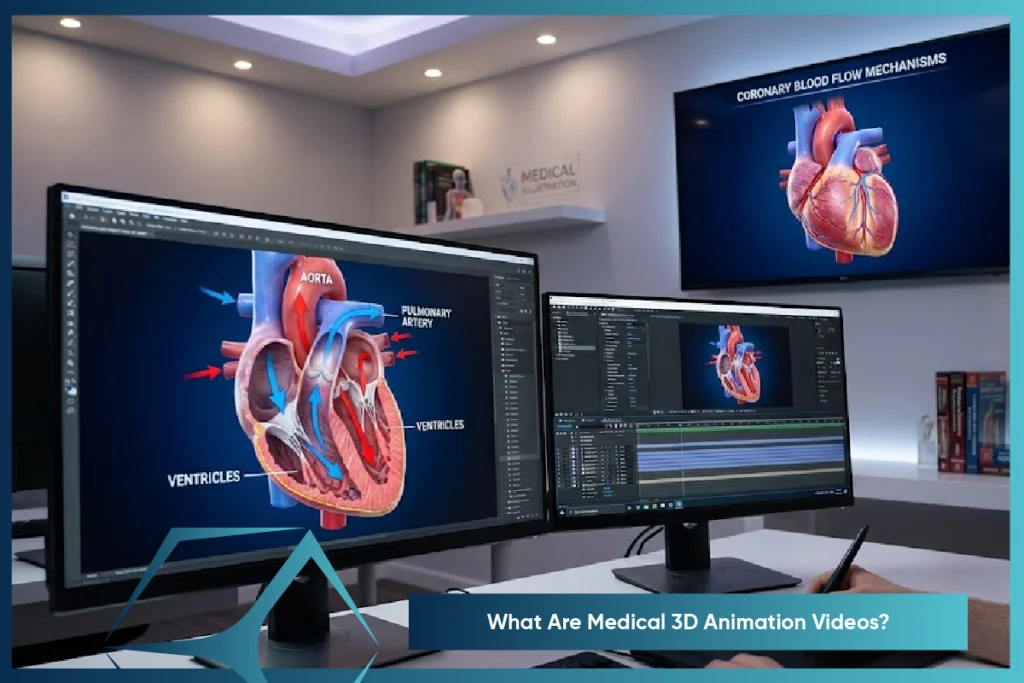
Medical 3D animation videos are high-precision digital visualizations used to explain biological processes, surgical procedures, and drug mechanisms using 3D modeling technology.
Medical 3D animation video is used for:
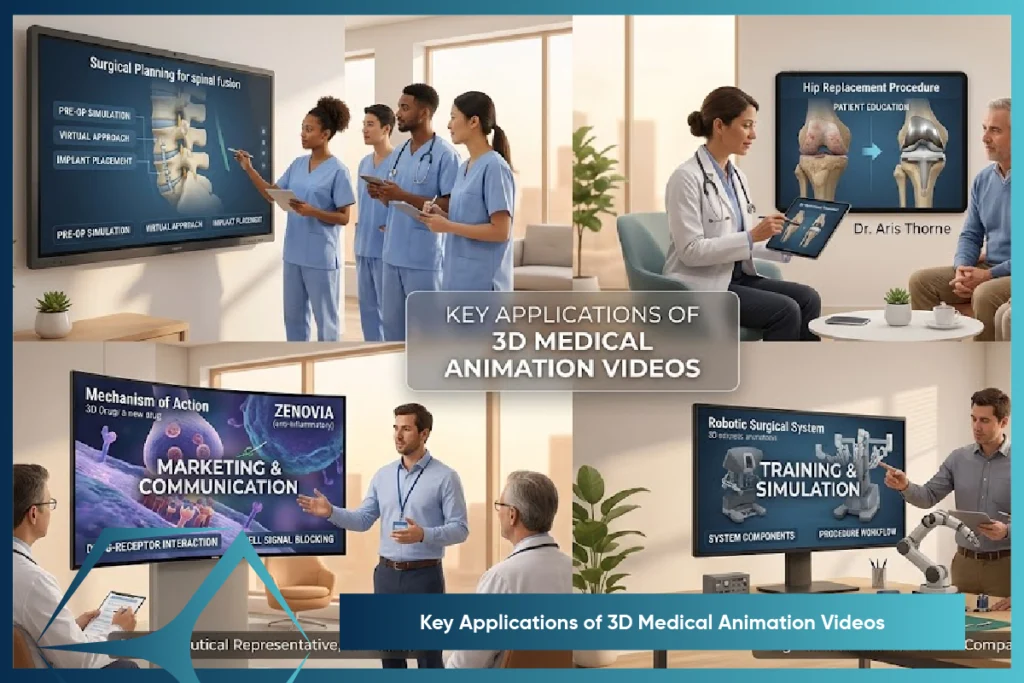
The pharma companies are using 3D animations to explain.
So, instead of just a technical brochure, 3D medical animation video allows doctors to understand how the drug behaves in the human body.
The hospitals and surgical institutes are using animations for:
Example: a presurgical bypass procedure is shown step by step with clarity.
Medical device companies use 3D medical animation videos and show:
This increases the investor’s confidence and the regulatory approval
Patients can struggle to understand:
3D medical animation videos simplify this as:
Universities and online educational platforms use animations for:
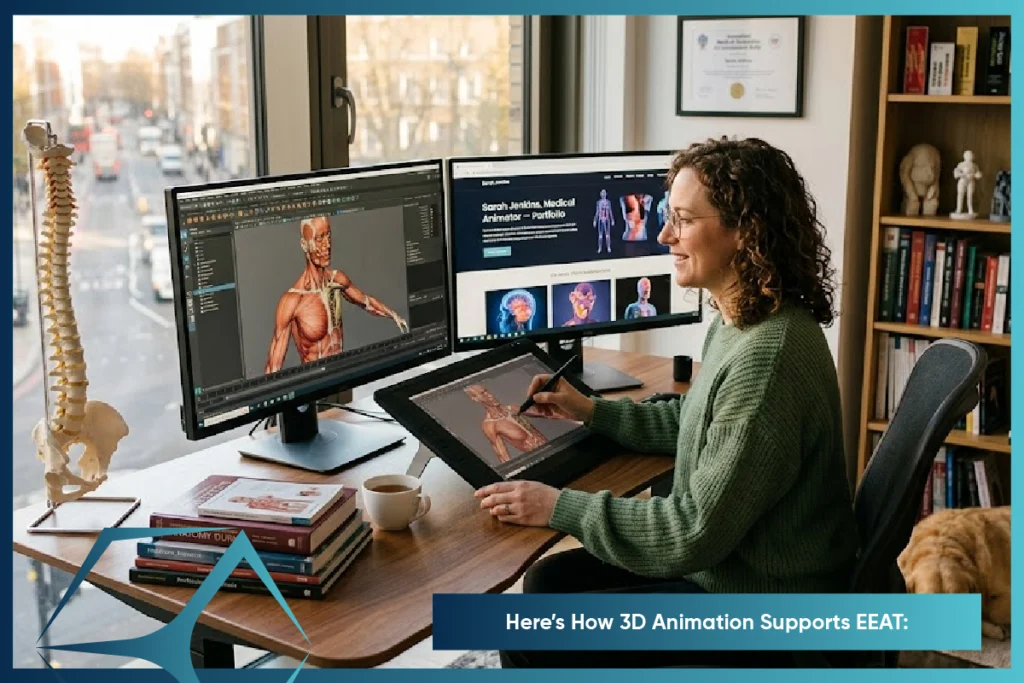
How Medical 3D Animation Aligns with EEAT Principles in Healthcare Content
In healthcare communication, accuracy and credibility are critical because the information often influences medical understanding and decision-making. This is why medical content falls under “Your Money or Your Life (YMYL)” standards, where trust and correctness are essential.
Medical 3D animation supports stronger EEAT (Experience, Expertise, Authority, Trust) when it is developed through a structured and validated production process:
High-quality medical animations are typically developed with input from medical illustrators, biomedical specialists, and subject matter experts. This ensures that anatomical structures, biological processes, and clinical mechanisms are represented accurately rather than artistically exaggerated.
In professional production environments, medical animations are not created in isolation. They involve iterative collaboration between creative teams and healthcare professionals, where scripts, storyboards, and simulations are reviewed multiple times to ensure scientific correctness and clarity.
Authority is strengthened when visual content is aligned with recognized medical references such as peer-reviewed research, clinical studies, and established healthcare guidelines. This ensures that animations reflect validated medical knowledge rather than speculative interpretation.
Trust is built when healthcare visuals reduce ambiguity instead of increasing it. In patient education, clinical training, and pharmaceutical communication, clear and accurate visualization helps reduce misunderstanding and supports more informed decisions.

Get a custom medical 3D animation tailored to your product, research, or patient communication needs.
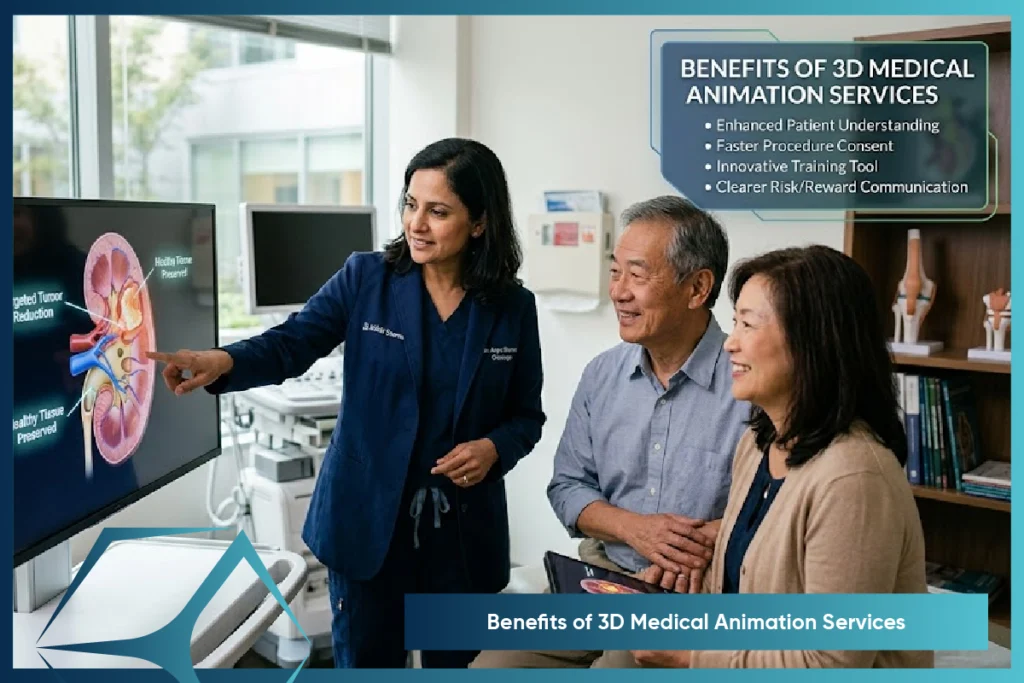
Medical concepts often fail when explained only through static images or text because they involve movement, timing, and interaction. 3D animation allows these processes to be shown step-by-step, making it easier to understand how systems behave over time—such as how a drug binds to a receptor or how a disease progresses at a cellular level.
This is especially useful in clinical education and pharmaceutical communication where accuracy of process matters more than surface-level explanation.
One of the biggest challenges in healthcare is the gap between medical terminology and patient understanding. When patients do not fully understand their condition or treatment, it can lead to hesitation, anxiety, or poor compliance.
3D medical animations help translate complex medical language into visual explanations, making consultations clearer and more efficient. This improves trust and supports better shared decision-making between doctors and patients.
For pharmaceutical and medical device companies, explaining “how it works” is often more important than listing features. 3D animation allows teams to demonstrate mechanisms of action, device functionality, and biological impact in a way that is easier for healthcare professionals to evaluate quickly.
This leads to better engagement during product presentations, medical conferences, and investor discussions.
Healthcare communication often varies between individuals, departments, and regions, leading to inconsistent explanations of the same concept. A well-designed 3D animation provides a standardized visual reference that can be used across sales teams, medical education, and training programs.
This reduces miscommunication and ensures consistency in how medical information is delivered globally.
Because 3D animation relies heavily on visual storytelling rather than language, it becomes highly effective in multilingual and international healthcare environments. It allows the same medical concept to be understood across different regions without requiring heavy localization of content.
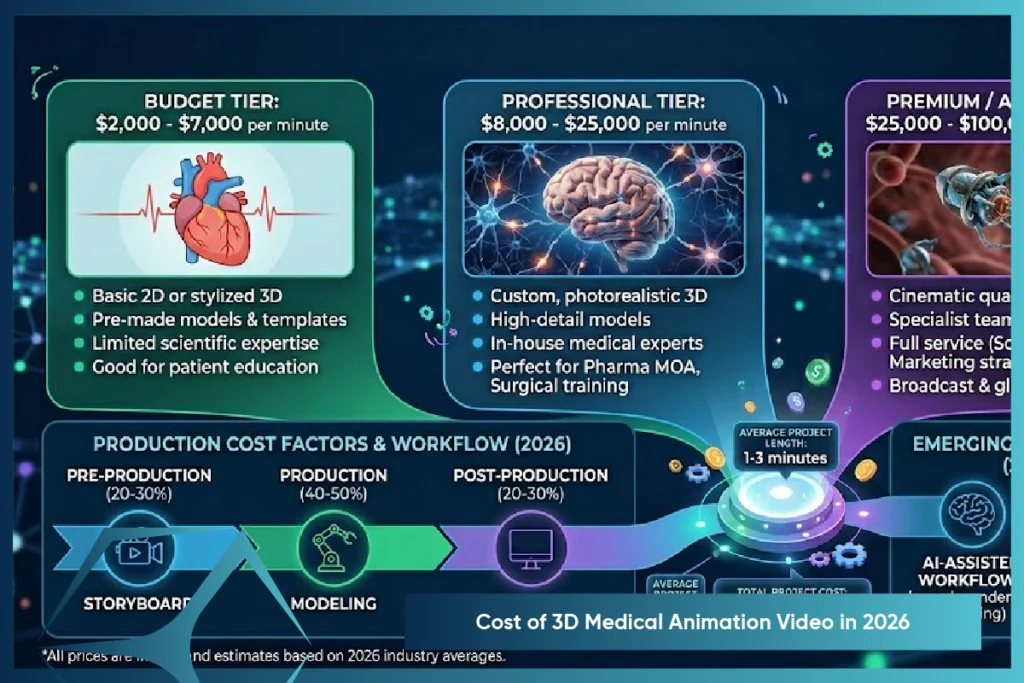
The cost of a 3D medical animation video can vary depending on the depth, visual fidelity, and production requirements. So, unlike various generic animations, medical animation would demand anatomical accuracy, clinical validation and expert view. This influences the pricing, such as:
This category is suitable for simple educational and awareness-based content. It includes:
This level introduces greater scientific precision and visual sophistication.
It includes:
This is the highest level of medical animation 3D; it requires expert input from animators, scientific consultants and medical professionals.
This will include:
At TVS Cube, there isn’t a fixed price for 3D animations, because every project is unique and requires a special set of communications. So, pricing is just tailored to:
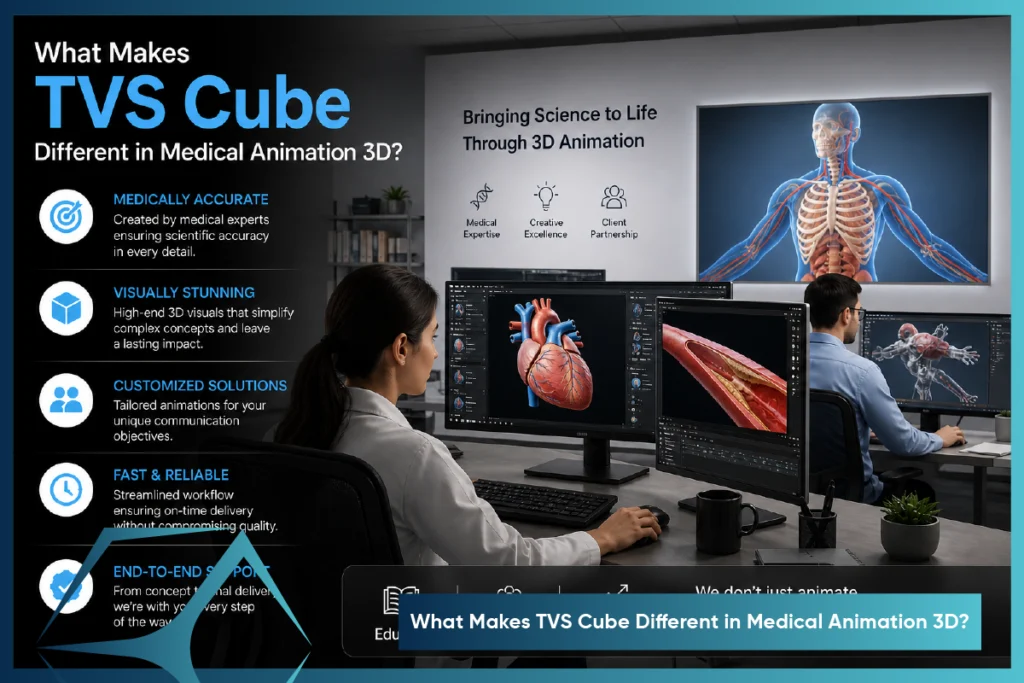
Unlike generic animation studios, the TVS Cube highly specialize in the medical grade visualization with scientific accuracy as its foundation.
Animations will be validated using:
Here we will combine:
The projects will include:
The animations are designed to align with:
Here we will use:
Explore real projects, case studies, and results delivered by TVS Cube.
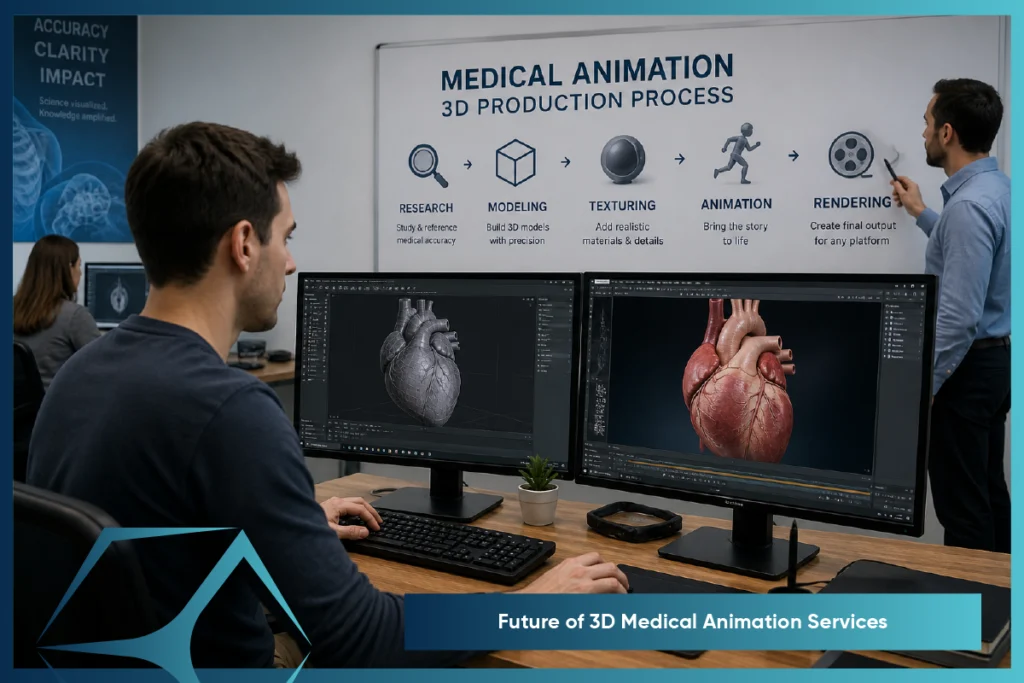
We analyze:
The visual flows are planned scientifically before any animation begins.
The tissues, organs, and devices are modelled with anatomical precision.
Processes like:
High-resolution outputs are created for:
Medical experts verify accuracy before final delivery.
The industry is moving toward:
At TVS Cube, 3D Medical Animation Services integrate:
Case Study Example
Challenge:
Solution:
Result:
Speak with our experts to plan a scientifically accurate animation that fits your goals and budget.
In 2026, the 3D animation videos will not be optional but an integral part of the healthcare facilities.
The bridge the gap between:
TVS cube not just creates animations but a scientifically validated visual experience that improves healthcare globally.
Our main goal is to:
Medical 3D animation is the most powerful tool today.
Read Also : 3D Animation in Medical & Health Care: Predictions for 2025