







In professional animation, motion alone isn’t enough—it has to feel right. And that’s where the squash and stretch principle comes in. From natural character movement to emotional imagery, this enduring technique is what distinguishes the forgettable flat frames from high-impact smooth storytelling.
At TVS Cube, we use squash and stretch in our 2D and 3D animation solutions to design eye-catching motion that prescribes purpose and gives every frame realism and rhythm. Whether you’re building animated ads, games, or brand films—understanding this principle is the first step toward animation that not only looks great, but truly connects.
What Is Squash and Stretch?
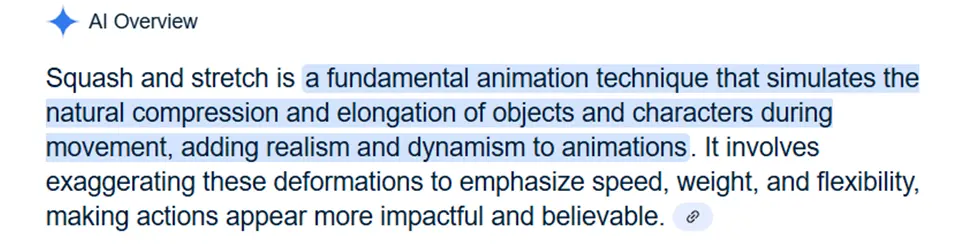
Squash and Stretch is a basic law of animation that introduces flexibility, weight, and life to motion. Squashing or stretching forms, animators simulate the real reaction of objects to movement, speed, and collisions. Squash and Stretch produces images with a smooth and emotional feel, without stiffness normally incorporated in computer or CGI-produced animations.
We combine squash and stretch at TVS Cube in our 2D and 3D animation company firm to get the most out of each project—be it motion graphics and product demos or game assets. Our goal is to deliver movement that not only appears good but also expresses emotion, energy, and storytelling that connects with your audience
Why Do Animators Need Squash and Stretch in Animation?
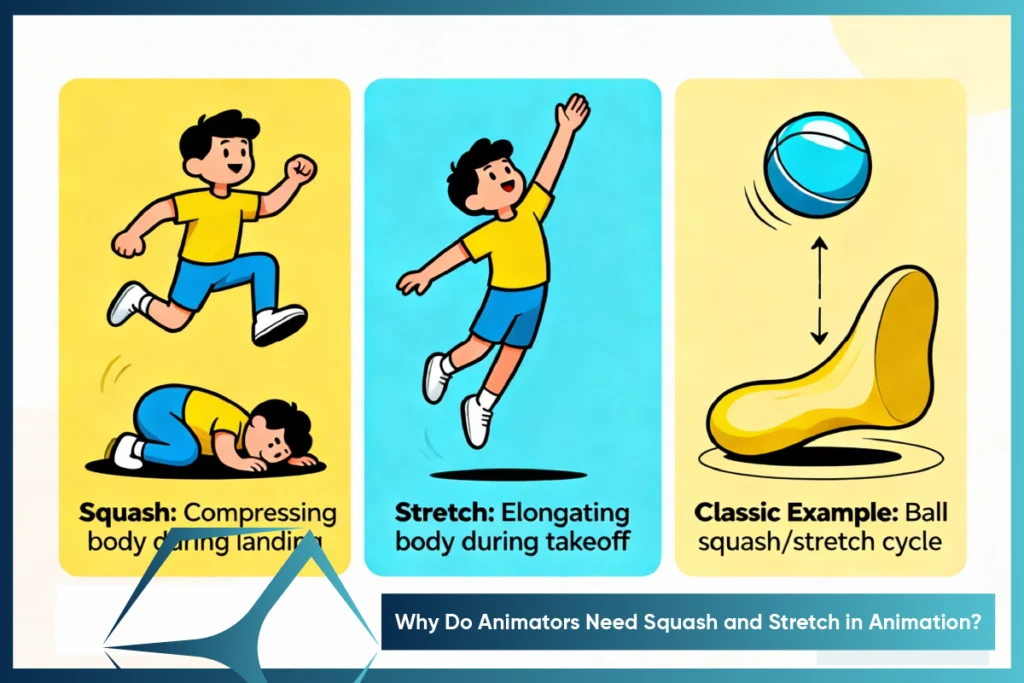
Squash and stretch animation is employed by animators to create motion that is living, dynamic, and emotionally engaging. It replicates the manner in which shapes respond to pressure, weight, and velocity—conferment of life and motion to animation. Without it, images are rigid or mechanical, particularly in 3D where geometry is a masterpiece of perfection. The technique infuses bounce, elasticity, and reality into each frame.
For agencies and brands, squash and stretch is more than technique—more than a process—it’s a storytelling tool. At TVS Cube, we infuse this philosophy into our 2D and 3D animation to produce emotive, memorable content. Whether it’s an explainer video or product launch, our animation inspires, connects, and performs through motion that moves people.

Want Stylized Or Realistic Animation? We Do Both!
Bring your ideas to life with stunning animations that captivate your audience and boost engagement.
How To Master Squash and Stretch?
Young animators oversquash and overstretch, particularly in walk cycles. This leads to unnatural or clumsy movements. Less is more—keep the animation maxim in mind: “Feel it, don’t see it.” Deformation must add to the motion, not take away from it.
If it’s clearly visible during playback, it’s either too much or held too long. Always snap back to neutral shapes quickly after exaggerated poses. This keeps animations snappy and believable without distracting the viewer.
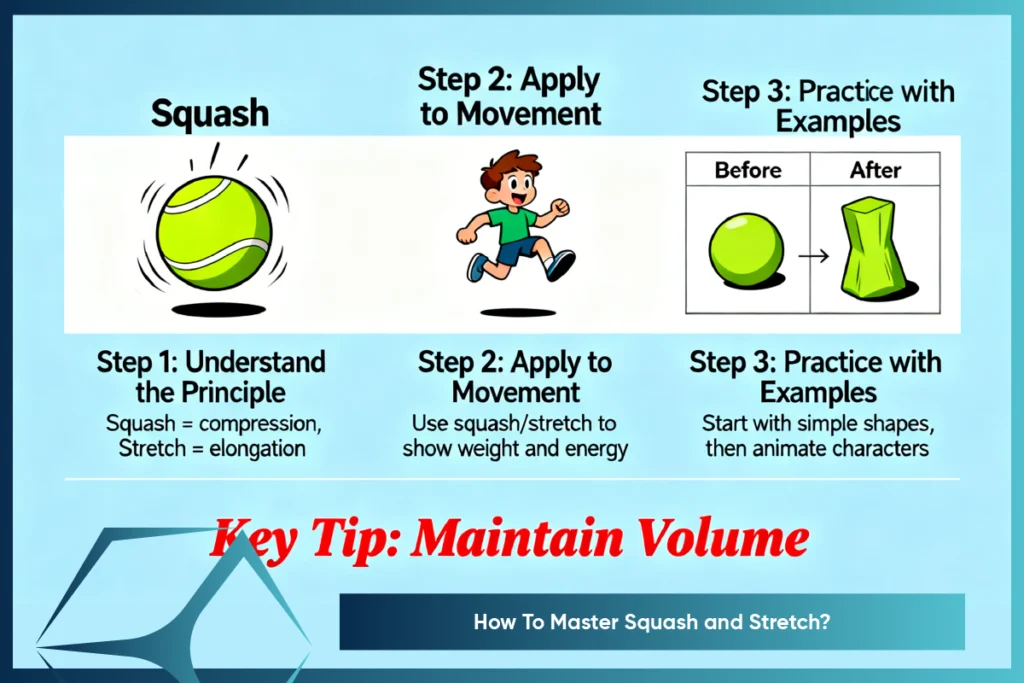
The Application of Squash and Stretch in Animation
Examples in Traditional Animation
Stretch and squash developed in old hand-drawn animation when they employed exaggerated motion and cutesy. Recall early Disney’s Steamboat Willie or Looney Tunes—Bugs Bunny and Daffy Duck squashing, bobbing, and stretching out unrealistically but in an active way.A classic animation exercise—the flour sack—illustrates how a simple form can convey weight, feeling, and personality through squash and stretch alone.. Animators bring it to life making it puff, flatten, or ripple through a scene.
Examples in Modern Animation
2D animators today apply squash and stretch more subtly. Pixar and DreamWorks apply it to express emotional depth and minimal physical change—enough to be realistic, yet introduce more character expression.
A good example is Klaus (Netflix, 2019), which has characters squash a little when they walk or when they are surprised, blending perfectly with the movie’s painterly 2D animation imitating 3D depth.The exaggeration is softer, but its presence is still essential for believable animation.
Examples in 3D Animation
In 3D animation, squash and stretch is both an art and a technical feat. Pixar’s iconic bouncing ball in early shorts is a textbook example—it flattens on contact and elongates mid-air, all while preserving volume.
Modern tools like Blender or Maya help animators rig characters or objects to deform correctly. From squishy monsters to stretchy superheroes, animators use deformers and dynamic simulations to maintain realism while exaggerating action.
Why Do We Need Squash and Stretch?
Stretch and squash is important in animation because it makes movement alive, believable, and emotional. Picture a character with no bounce and give-only rigid action and empty reaction. That’s what you have without squash and stretch. Like a rubber ball losing air when it’s dropped to the floor, computer characters require this motion distortion to exist. Whether they’re talking or flying, it makes every movement more expressive.
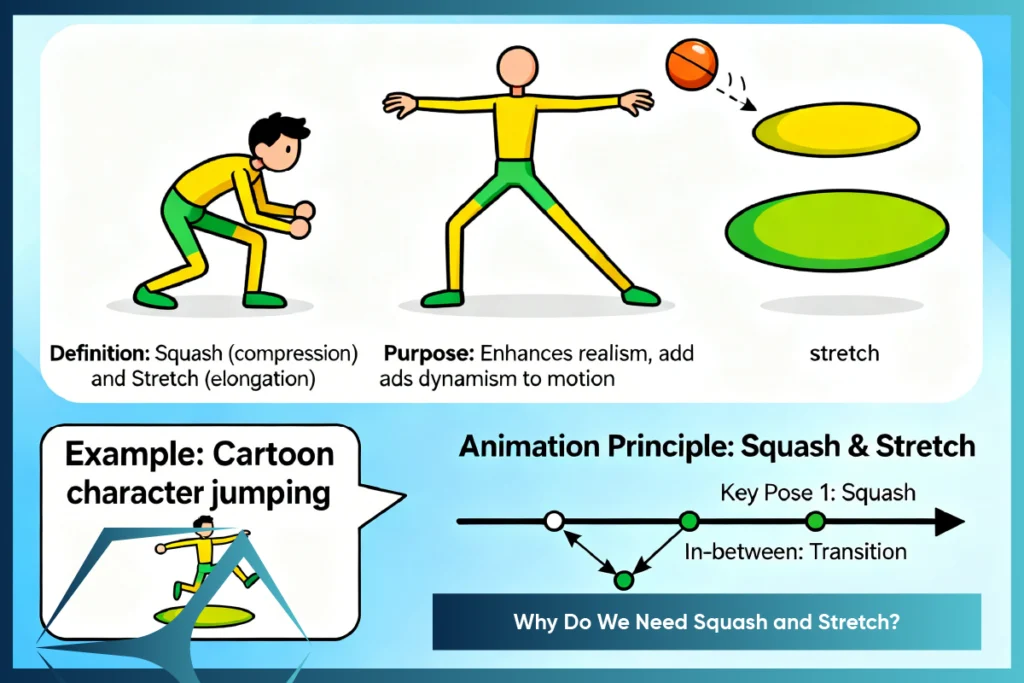
Character Structure and Squash and Stretch
Squash and stretch play a key role in giving animated characters personality. This technique works for both stylized and true-to-life animation allowing for stronger emotions and movements by changing shapes. It goes well beyond simple bouncing effects helping to show how a character deals with their surroundings.
Maintaining Volume
One of the golden rules when using squash and stretch is preserving the character’s volume. When a shape squashes, it should spread outward, and stretching a move will almost always result in simultaneous narrowing to keep the volume constant: without that, any animation will feel wrong to some degree. Characters may appear to be weightless or almost float-like, deviating from the feel of solidity and realism.
Enhancing Emotions and Actions
Facial squash and stretch can turn basic expressions into powerful emotional cues. A widened mouth during a scream or squished cheeks during laughter gives extra flair. These exaggerated motions add clarity and intensity, making the audience instantly connect with how the character feels.
Creating Believable Motion
From a superhero landing to a clumsy stumble, squash and stretch bring motion to life. They help show force, momentum, and elasticity. A stretched leg mid-run or a squashed torso on impact makes movements feel natural, fluid, and full of energy, improving animation flow overall.
Why Is Squash and Stretch Important in Animation
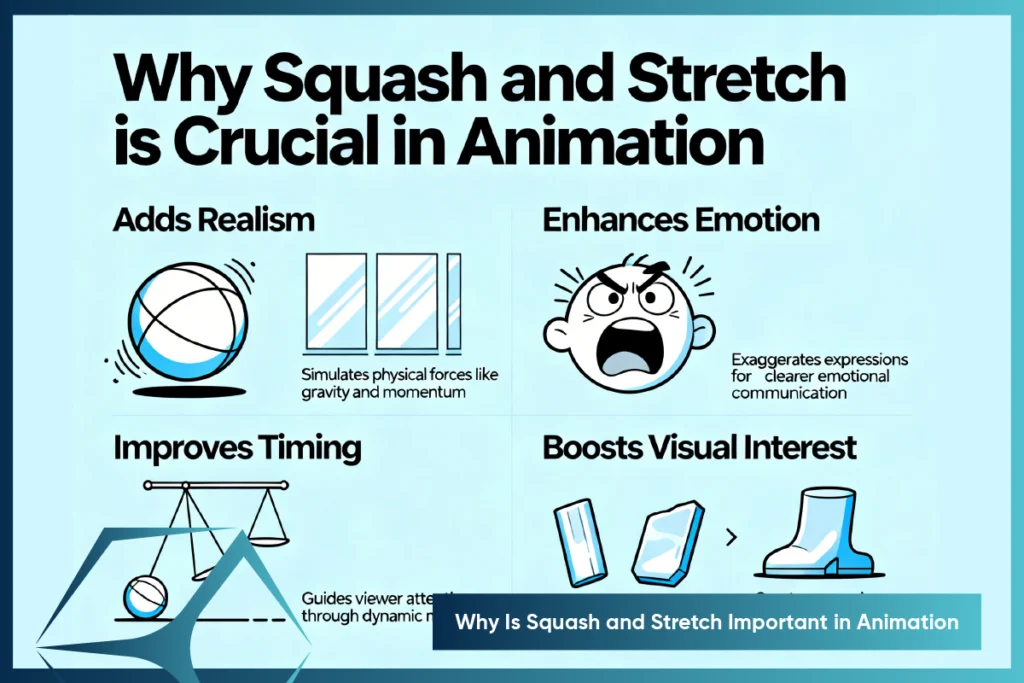
Animation stretch and squash principle that gives objects and characters a sense of weight, flexibility, and life. Without it, animated movements feel stiff, mechanical, and disconnected from real-world physics. This technique helps animators bring personality, realism, and emotion into motion—whether it’s a bouncing ball or a cartoon character reacting to surprise.
How It Impacts Motion Realism
Real-world movement is elastic. Look at the manner in which a rubber ball distorts when it bounces off the ground—it compresses and then stretches upward when it springs back. Squash and stretch imitate these natural deformations to simulate physics, gravity, and momentum. Without using this principle, animation appears wooden and unreal.
Emotional Expression Through Deformation
Aside from realism, squash and stretch also serve as effective emotional delivery tools. The face can be squashed to frustration or stretched to joy. Those minimal exaggerations of movement make emotional beats more effective, and the animation more real and interesting.
Creating Appealing Characters
Appeal is perhaps the most critical ingredient of great character animation. Squash and stretch bring life to all movement, from the blink to the big leap. The character becomes more playful, more stylized, and more enjoyable to view—things that tantalize the eyes and heighten the story.
Tools and Software That Help With Squash and Stretch
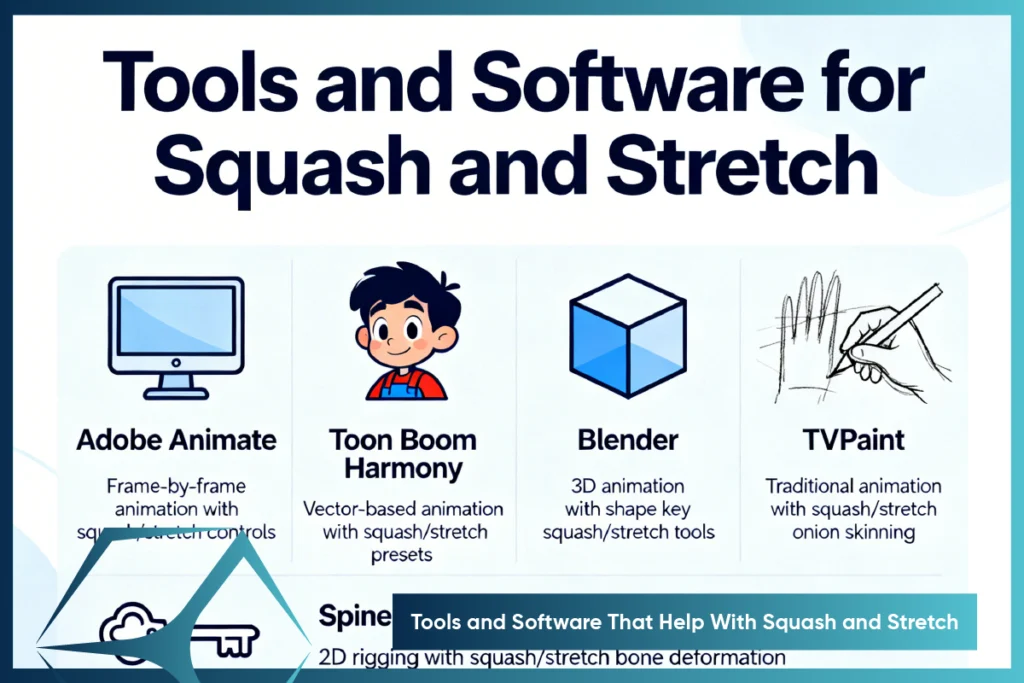
Contemporary animators do not need to frame-by-frame draw to get squash and stretch anymore. Rich animation software and tools make it faster and easier to get realistic, elastic, and exaggerated movement in the present. These tools contain built-in features such as rigging, shape keys, deformation controls, and easy keyframe management that allow one to squash and stretch easily in both 2D and 3D.
Famous Software
Blender
Robust and free, Blender contains advanced rigging and shape key systems perfectly suited for dynamic deformation. It’s a go-to tool for many indie animators and professionals working in 3D.
Maya
Professional level for 3D animation with intense rigging and constraint systems for facilitating proper squash and stretch control. Widely used in the film and game industry for high-end character animation.
After Effects
Suitable for motion graphics and 2D-style animation with puppet tools, scaling, and easing keyframes. Great for applying squash and stretch in quick, stylized animations or UI effects.
Common Mistakes and How to Avoid Them
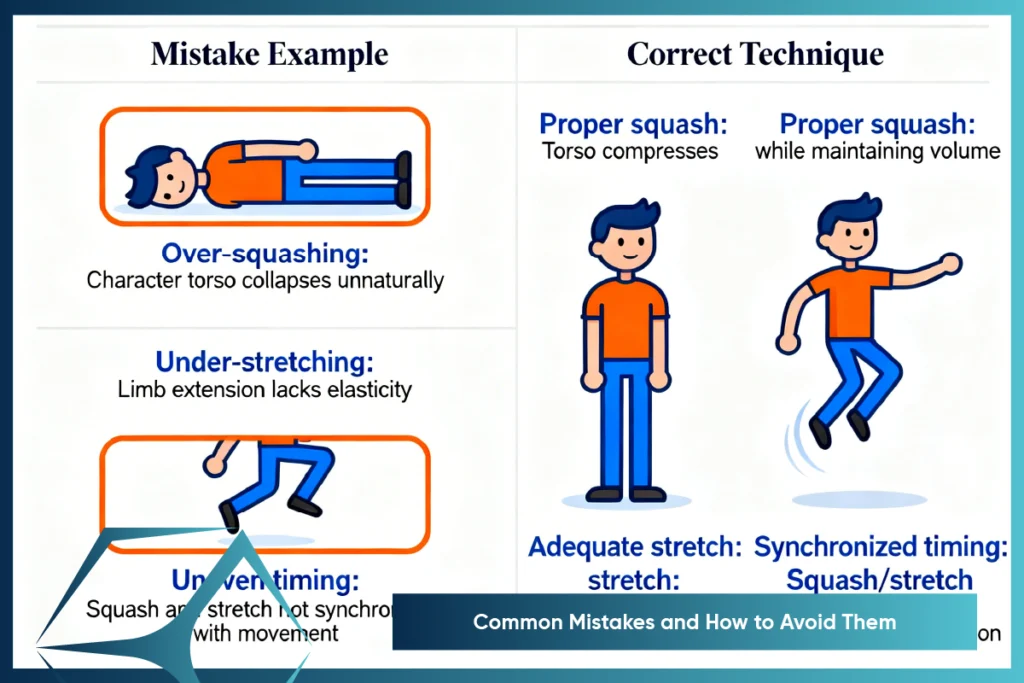
Over-Exaggeration: Finding the Right Balance
Over-exaggerating squash and stretching is a common mistake among beginners. While exaggeration adds life, too much of it can break realism. Overdoing it on heavy or rigid objects, like a bowling ball, feels unnatural. This disrupts immersion, especially in semi-realistic animations. Always balance exaggeration with the style you’re animating in.
How to Avoid It:
Observe real-world physics: Consider how different objects behave naturally. Soft materials like rubber may show more distortion, while harder objects stay rigid.
Study animation styles: Compare cartoon styles like Looney Tunes with modern films like Pixar to understand when extreme exaggeration works and when subtlety is better.
Layer your animation: Start with a clean base animation without effects. Add squash and stretch later, only where needed, to support the action rather than overshadow it.
Volume Retention: A Key to Consistency
Failing to maintain volume during squash and stretch is a common mistake. It’s important to remember that deformation shouldn’t change the object’s mass—only its shape. For example, when squashing a ball, its height shrinks while its width increases to keep the volume the same. If volume isn’t preserved, the animation loses realism and physicality.
How to Avoid It:
- Use reference guides: Set up grids or aids in your software to visually track volume during deformation. Most 3D tools offer volume monitoring features.
- Manual volume checks: In 2D animation, trace your frames to ensure shape changes still maintain surface area. Balance width and height as you squash or stretch.
- Practice geometric shapes: Start with basic shapes like circles and squares, where volume is easy to monitor, then apply the technique to complex characters.
Matching Squash and Stretch with Motion
Squash and stretch should match the speed and force of the motion. Slow movements need minimal deformation, while fast, impactful motions benefit from exaggerated stretch and squash. Overdoing it in slow scenes can make the motion feel unnatural.
How to Avoid It:
- Use speed as a guide – Faster motions = more deformation. A quick leap stretches more than a slow step.
- Animate motion first – Get the basic movement right, then enhance with squash/stretch.
- Smooth transitions – Ease in and out to avoid jerky or robotic motion.
Using Squash and Stretch for Emotional Effect
Beyond physical motion, squash and stretch can express emotions. A squashed character can show sadness or defeat, while a stretched one can show surprise or excitement. This adds personality and depth.
How to Avoid Overdoing It:
- Match tone – Subtle in serious scenes, exaggerated in comedy.
- Adjust intensity – Use subtle stretch for mild emotions, stronger deformation for extreme reactions.
- Stay balanced – Blend realism with exaggeration to keep the scene believable and emotionally on point
How to Practice Squash and Stretch as a Beginner
You don’t need a full studio setup to master squash and stretch. With a bit of discipline, keen observation, and regular practice, you can build strong animation fundamentals right at home. These beginner-friendly exercises will help you internalize timing, spacing, and volume preservation.
Start With a Bouncing Ball
This is the classic warm-up exercise for a reason. Animate a ball falling and rebounding—squashing it slightly on impact and stretching it on the rise. Focus on keeping the ball’s volume consistent, and play with the timing to understand weight and motion better.
Animate Simple Characters
Try working with stick figures or the classic flour sack. These simple shapes are easy to deform and perfect for learning how to express character and emotion using squash and stretch. You’ll learn how exaggeration helps communicate movement and intent.
Break Down Frames from Reference Animations
Pick a favorite cartoon or animation clip and step through it frame by frame. Study how the animators used squash and stretch for impact, personality, or realism. Redraw those keyframes to train both your eye and hand in capturing deformation.
Beyond Characters: Squash and Stretch in Objects and Effects
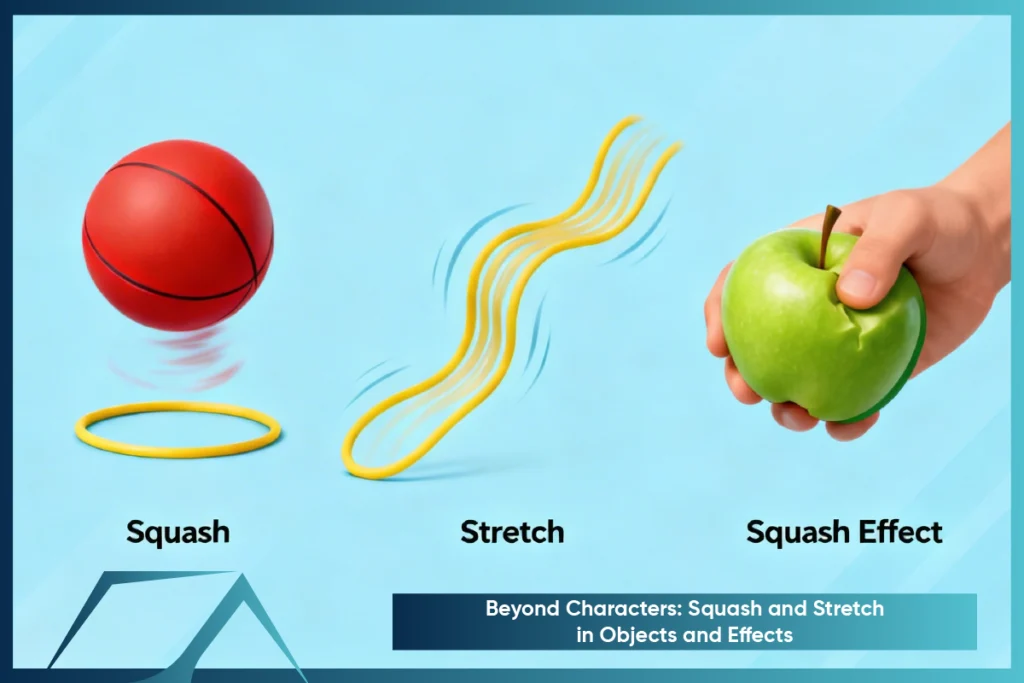
Characters aren’t the only elements that benefit from movement. Squash and stretch also bring life to objects, environments, and even visual effects.
Using the Technique on Props and Particles
Think of a sword flying through the air after a powerful strike or an apple bouncing in a cartoon. These subtle deformations add realism and energy to props in motion.
Adding Meat to Environmental Animations
Nature isn’t stiff—trees sway, waves crash, and clouds puff. Squash and stretch applied subtly to these elements helps mimic their natural rhythm and flow.
Adding Weight to Non-Living Objects
Whether it’s a heavy bag of flour or a soft blob of jelly, a slight squash or stretch gives weight and believability. These small touches make even simple objects feel alive.
Enhancing Storytelling with Squash and Stretch
Animation is storytelling in motion—and squash and stretch help amplify that narrative visually.
Employing Motion to Express Personality
A bold, confident character might stretch tall with pride. A shy or nervous one may squash down. These physical cues instantly reveal emotion and personality without words.
Accentuating Comedy or Drama with Timing
Exaggerated squash and stretch add punch to comedic moments, while subtle shifts—like a soft shoulder drop during a sigh—add emotional weight in drama.
When to Go Subtle vs Exaggerated
Not every moment needs wild movement. Use bold deformation in key scenes, and keep it light elsewhere to maintain visual balance and storytelling clarity.
At TVS Cube, we master the art of squash and stretch to shape stories that connect, entertain, and inspire—frame by frame.
Want 2D & 3D Animation That Makes Your Brand Shine?
Transform your ideas into engaging visuals that capture attention, boost brand visibility, and drive results.
Final Thoughts!
Squash and stretch isn’t just a technique—it’s the heartbeat of great animation. From bouncy 2D characters to expressive 3D models, this principle adds life, weight, and emotion to every frame. Whether you’re crafting stylized 2D explainer videos or immersive 3D game worlds, squash and stretch helps animations feel real, relatable, and engaging.
At TVS Cube, we use this timeless principle in both our 2D and 3D animation services—not just to move visuals, but to move people.
Read Also : From Concept to Creation: TVS Cube Animation Studio’s 3D Animation Services
Reference
Anideos What is the Squash and Stretch Principle in Animation?
Garage.farm Squash and Stretch: Bringing Life to Animation
Pixune : Squash and Stretch: The Magic of Bounce and Elasticity